

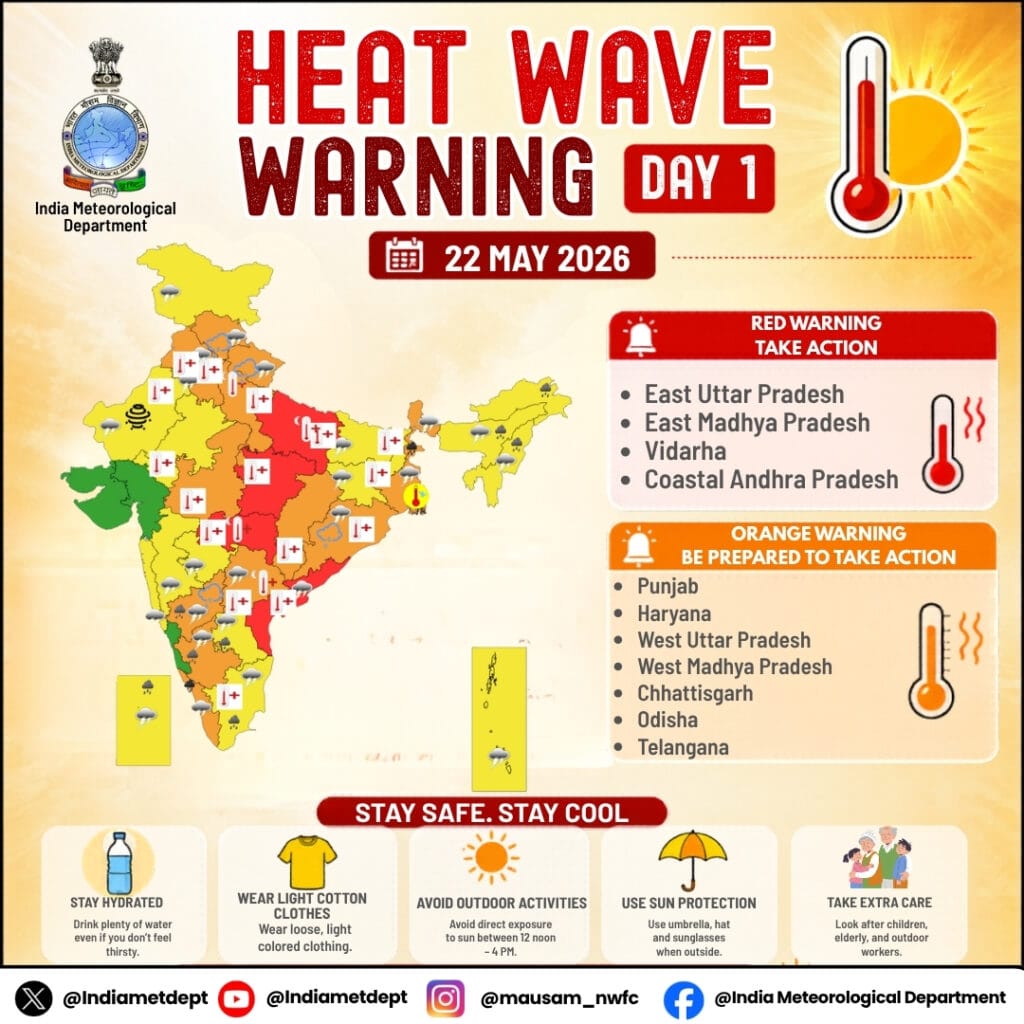
May 2026 highlighted the growing impact of climate change across India and the world, with extreme heat and shifting weather patterns emerging as major concerns. Throughout the month, large parts of India experienced severe heatwave conditions, with temperatures crossing 45°C in several regions.
As a result, the intense heat disrupted daily life, affected agricultural activities, and placed significant pressure on public health systems. Hospitals reported an increase in cases of dehydration and heat-related illnesses, particularly among children, senior citizens, and outdoor workers. To address these challenges, the India Meteorological Department (IMD) issued multiple heatwave alerts, while state governments activated heat action plans to protect vulnerable communities.
Meanwhile, attention has shifted to the upcoming monsoon season. According to forecasts, India may receive below-normal rainfall in 2026. The IMD estimates that rainfall could reach only around 90% of the long-term average. Consequently, experts have expressed concerns about agricultural productivity, especially for crops that depend heavily on seasonal rainfall.
Furthermore, a weak monsoon could reduce food production, affect rural incomes, and place additional strain on the broader economy. Since millions of farmers rely on monsoon rains for their livelihoods, any significant rainfall deficit could create challenges across the agricultural sector.
On the global front, climate scientists and environmental organizations continue to warn about the increasing frequency of extreme weather events. They attribute these developments to long-term global warming and rising greenhouse gas emissions. In addition, recent studies suggest that the world could experience even higher temperatures in the coming years if countries fail to reduce emissions significantly.
The United Nations has also renewed its call for urgent climate action. According to environmental experts, rising global temperatures are increasing the risks of heatwaves, floods, droughts, and other climate-related disasters across multiple continents. Therefore, governments must strengthen both mitigation and adaptation efforts to reduce future risks.
Moreover, environmental specialists have emphasized the need for stronger adaptation strategies. These include improved water management systems, climate-resilient infrastructure, sustainable agricultural practices, and more effective disaster preparedness measures. They have also urged governments to expand early warning systems and invest in long-term climate resilience initiatives.
Overall, the events of May 2026 serve as a powerful reminder of the accelerating impacts of climate change. As temperatures continue to rise and weather patterns become increasingly unpredictable, experts stress that governments, industries, and communities must act collectively to address one of the most pressing challenges of our time.
